



A commercial space does not need to undergo an expensive refurbishment to make an impression.
For conferences, exhibitions, product launches, corporate functions and temporary installations, the right graphics can radically alter how an environment looks and feels. Vinyl wrapping is particularly effective because it allows existing surfaces to become part of the event design without the permanence, disruption or structural intervention associated with conventional refurbishment.
In Cambridge, where commercial, academic, scientific and technology-focused organisations frequently host events, that flexibility can be invaluable.
A reception area can become a branded welcome point. A structural column can become a giant graphic. An otherwise anonymous wall can become a storytelling surface.
The transformation can be remarkably swift.
Why Commercial Spaces Need to Become Event-Ready at Speed
Events operate according to unforgiving schedules.
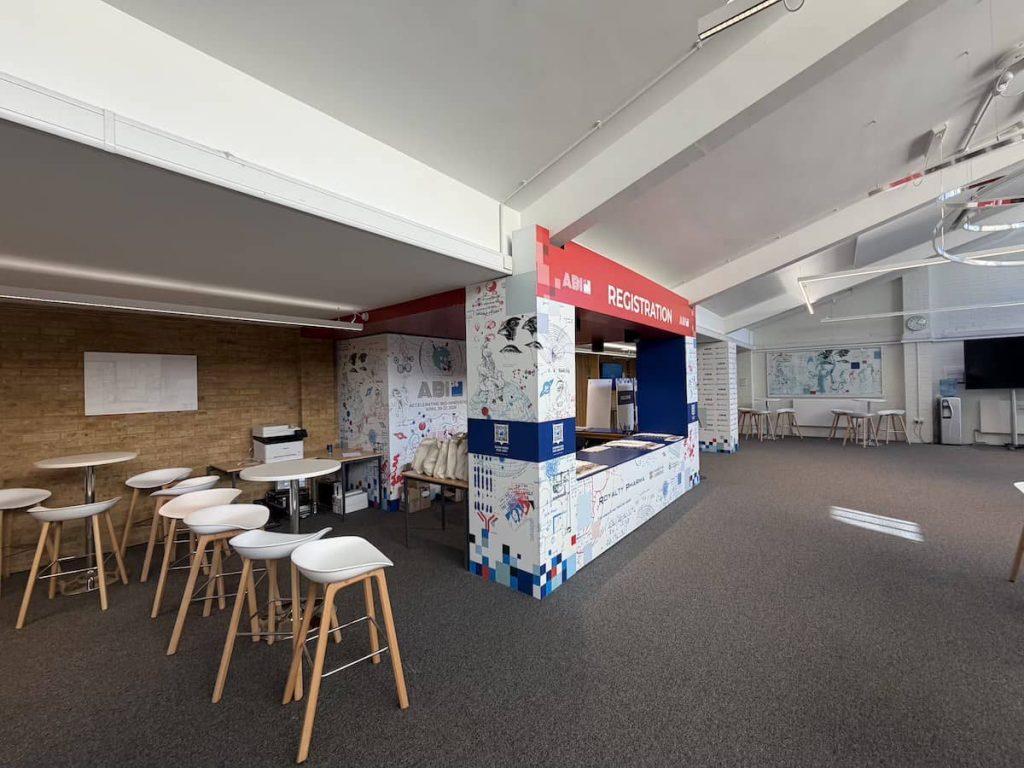 A venue may function as an everyday workplace, educational environment, conference facility or commercial building one day, then need to accommodate hundreds of delegates the next. There is little appetite for lengthy construction work, intrusive decorating or alterations that leave a permanent legacy once the event has finished.
This is where temporary environmental graphics become particularly useful.
Rather than changing the underlying architecture, vinyl wrapping allows selected surfaces to be visually reimagined. The physical environment remains essentially intact while its appearance undergoes a substantial metamorphosis.
That distinction matters.
A business can create a strong visual identity for an important event without commissioning permanent building work. Once the event has concluded, graphics can be removed or replaced, allowing the space to return to its usual function or prepare for another campaign.
For busy commercial premises, that adaptability is more than a design advantage. It is a logistical one.
What Vinyl Wrapping Can Achieve in a Commercial Environment
Vinyl wrapping is often associated with vehicles, but its potential extends considerably further.
Large-format printed vinyl can be used across a wide variety of suitable interior and exterior surfaces, creating an opportunity to introduce colour, imagery, messaging, logos and graphical motifs into areas that might otherwise remain visually neutral.
The result can be subtle or dramatic.
A restrained corporate pattern may reinforce an established brand identity, while a floor-to-ceiling photographic treatment can completely alter the character of a room. Scientific illustrations, typographical statements, campaign imagery and directional information can all become part of the same visual system.
This makes vinyl particularly well suited to events because the graphics can be developed around the specific narrative of the occasion.
Instead of placing a few freestanding signs around a venue, the architecture itself becomes part of the communication.
That is a much more immersive proposition.
Start with the Surfaces That Have the Greatest Visual Impact
Not every available surface needs to be covered.
In fact, attempting to brand everything can dilute the impact of the design. The more effective approach is often to identify the areas that delegates naturally see, photograph and interact with throughout their journey.
Entrances are obvious candidates.
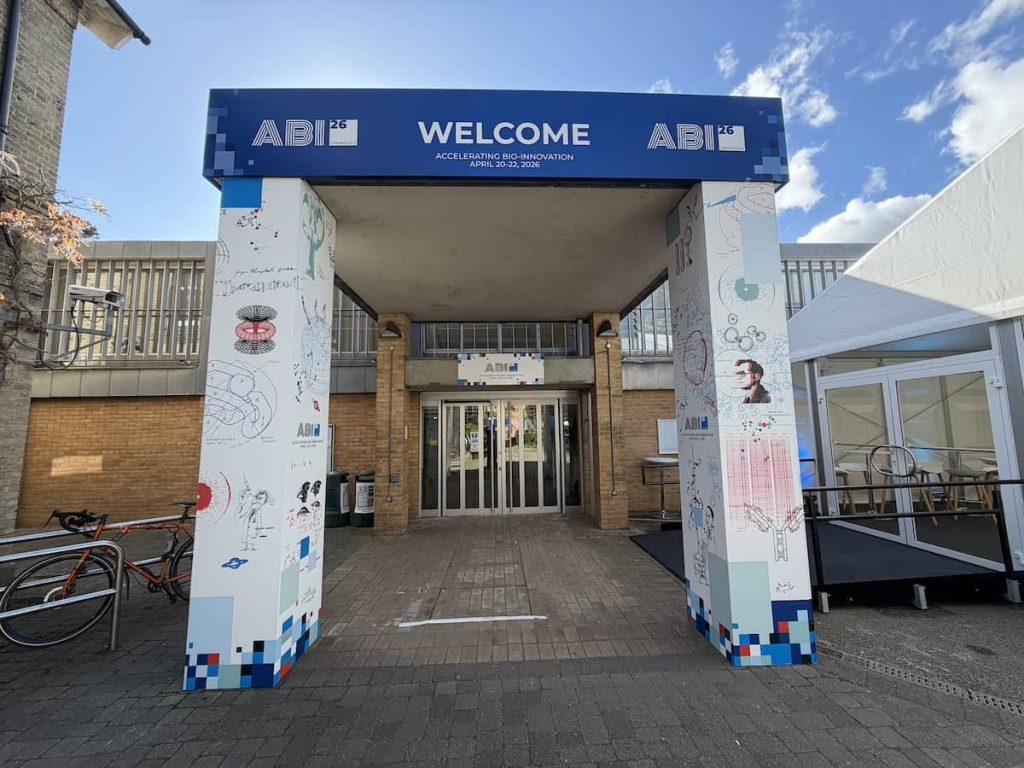
Reception desks, registration structures, prominent walls and circulation routes can also provide valuable opportunities. Structural columns are particularly interesting because they are frequently overlooked during conventional event planning, despite occupying significant visual real estate.
A carefully considered column wrap can introduce branding into the centre of a room without requiring additional floor space.
The same principle applies to counters, partitions and other suitable architectural features.
The objective is not simply to apply vinyl. It is to determine where visual intervention will produce the greatest return.
Good event branding has an element of choreography to it.
It anticipates where people will stand, where they will look and where photographs are likely to be taken.
Create a Cohesive Event Identity Across the Entire Space
One branded wall does not necessarily constitute a branded environment.
The strongest event installations establish visual continuity between different areas of a venue. Colours, typography, imagery, patterns and graphic motifs should feel as though they belong to one carefully orchestrated system.
This is particularly important when a venue contains several distinct spaces.
Delegates might enter through one area, register elsewhere, move through corridors, attend presentations and then gather in an exhibition or networking environment. If every area looks disconnected, the event can feel fragmented.
Consistent vinyl graphics help bridge those transitions.
A recurring colour palette can link otherwise disparate architectural features. A graphic motif can appear on columns, reception structures and wall panels. Logos can be positioned strategically rather than repetitively.
The result is an environment that feels intentional.
And intentionality is one of the hallmarks of sophisticated event branding.
Vinyl Wrapping Can Transform Awkward Architectural Features
Every commercial building has them.
Columns. Pillars. Service structures. Recesses. Oddly positioned walls.
Features that may seem like obstacles during the planning process can become some of the most effective elements of an event installation when treated creatively.
Structural columns are an excellent example.
Their cylindrical or rectangular geometry creates a three-dimensional canvas that can be wrapped with bespoke artwork, allowing branding to occupy a prominent position without constructing additional display units.
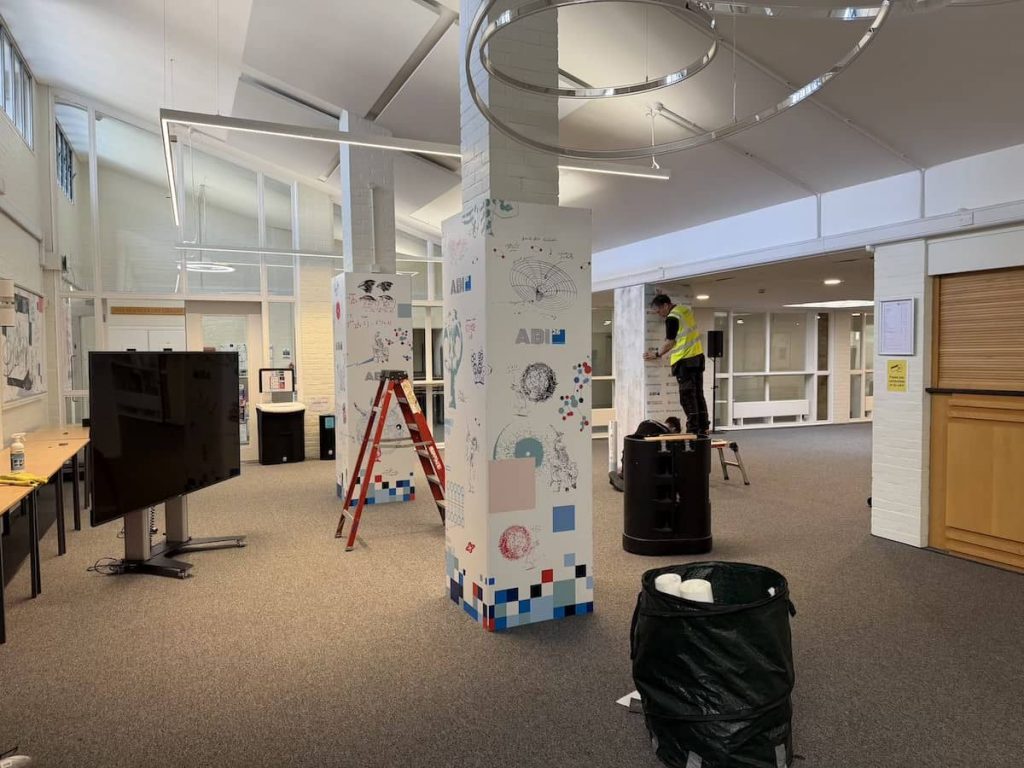
For scientific, technological or research-led events, these surfaces can accommodate diagrams, illustrations, data-inspired patterns or thematic imagery.
They can also act as visual landmarks.
A delegate might be told to meet beside a particular branded column, for example, turning what was previously an anonymous architectural feature into a recognisable navigational reference point.
This is where practical signage and creative graphics can converge.
Registration Areas and Entrances Set the Tone
First impressions are disproportionately important at events.
The entrance is where delegates form their initial perception of the environment. It is where anticipation becomes experience.
A branded registration structure can therefore do much more than display a logo.
It can establish the event’s visual language immediately, provide a clear focal point and create a natural point of orientation for visitors. When combined with appropriate wayfinding, the same installation can support both aesthetics and functionality.
Exterior graphics can extend that experience beyond the doors.
For a conference hosted within an existing commercial or institutional building, branded entrance graphics can make the venue immediately recognisable. Delegates should not have to wonder whether they have arrived at the correct location.
The transition from outside to inside should feel deliberate.
That continuity can be achieved through colour, typography, imagery and repeated graphic elements, creating a coherent journey rather than a collection of unrelated signs.
Working Around AV, Staging and Other Event Infrastructure
Modern events rarely involve graphics alone.
Staging, projection, lighting, audio equipment, screens, exhibition structures, furniture and technical infrastructure all need to coexist within the same environment. If these elements are designed independently, the finished space can become visually congested.
Close coordination is therefore essential.
The ABI conference project provides a useful example. Footprint Signs & Graphics worked alongside Venue AV, integrating the graphics package with the wider event production rather than treating the signage installation as an isolated exercise.
That collaborative approach allowed the visual elements to complement the staging and AV infrastructure while remaining aligned with the event schedule.
Timing is critical.
Graphics may need to be installed after certain production elements are in position but before delegates arrive. Access restrictions, working areas and installation sequences all need to be considered.
For event organisers, this is one of the principal benefits of working with an experienced installation partner: the graphics become part of the production plan rather than an afterthought.
Why Professional Installation Matters
A beautifully produced graphic can still fail visually if it is poorly installed.
Large-format vinyl requires careful preparation, accurate positioning and appropriate application techniques. Seams, edges, corners, joins and transitions can all influence the finished appearance.
At event scale, minor imperfections can become conspicuous.
A poorly aligned logo on a registration desk may be noticed by hundreds of people. A badly finished column wrap can undermine an otherwise sophisticated environment. On a photographic backdrop, even small defects can become particularly apparent when attendees take and share photographs.
Professional installation helps ensure the finished graphics look considered rather than improvised.
It also reduces disruption.
Commercial venues often have narrow installation windows, particularly when a conference or exhibition is being constructed within an operational building. An experienced team can work methodically around other contractors and production personnel, helping the installation progress without unnecessarily impeding the wider programme.
Speed matters.
But controlled speed matters more.
Using Event Graphics Beyond a Single Occasion
Temporary branding does not have to mean disposable thinking.
When developing graphics for a commercial environment, it is worth considering whether selected components could be adapted for future events, campaigns or internal initiatives.
A modular approach can make this possible.
Some elements might feature permanent corporate branding, while other panels contain event-specific messaging. Certain surfaces could be designed as interchangeable graphic zones, allowing future artwork to be introduced without redesigning the entire environment.
This approach can also support changing brand campaigns.
A corporate reception, conference room or exhibition space can be refreshed periodically without undergoing a complete refurbishment. The physical architecture remains consistent while the visual layer evolves.
For businesses that host regular events, that can provide a useful middle ground between permanent signage and completely temporary displays.
The space becomes adaptable rather than static.
Planning a Rapid Commercial Space Transformation
A successful installation begins well before the vinyl reaches the venue.
The first consideration should be the event objective. Is the priority brand visibility, delegate navigation, atmosphere, photography, product messaging or a combination of these?
Once that has been established, the most strategically valuable surfaces can be identified.
Artwork then needs to be developed with the physical environment in mind. Dimensions, surface characteristics, access, viewing distances and the geometry of architectural features can all influence the final design.
Production planning follows.
Installation dates should be coordinated with venue access and other contractors, particularly where AV, staging or exhibition structures are involved.
Finally, the graphics should be inspected as part of the complete environment rather than in isolation.
A successful event installation is a composite piece of visual communication. Every element needs to work together.
Turning Existing Space into an Event Environment
The most effective commercial event transformations do not necessarily require dramatic construction.
Sometimes the architecture is already there.
The opportunity lies in seeing it differently.
A column becomes a branded landmark. A reception desk becomes a welcome feature. An entrance becomes an unmistakable gateway. An otherwise ordinary wall becomes a piece of visual storytelling.
Vinyl wrapping provides the flexibility to make those changes quickly while retaining the underlying functionality of the space.
For businesses and event organisers in Cambridge, this can be particularly valuable when an existing venue needs to take on a completely different identity for a conference, exhibition, corporate gathering or promotional event.
The transformation can be temporary.
The impression does not have to be.
Create More Impact from the Space You Already Have
From large-format event graphics and structural column wraps to registration branding and professional installation, a carefully planned vinyl graphics package can turn an ordinary commercial environment into a distinctive event destination.
For event organisers, production companies and businesses preparing a venue in Cambridge, the key is to consider every suitable surface as part of the wider experience, not simply as somewhere to place a logo.